

Thanks to Rob Sica for sending me this new article.
I love coming across a new journal article that specifically focuses on morbid curiosity. During my PhD, I was pretty much the only researcher publishing on the topic. Now, there are several papers published each year tackling new and interesting questions related to the allure of the macabre.
I’ve long thought that there were two main routes to morbid curiosity. One is sensation-based. You enjoy the thrill of the hunt, so to speak, so media that portrays danger is a good way to get your kicks. You see this more often in teenagers and young adults, especially men.
The second route is the one my research has focused on more. This one is more epistemic. Stories of danger are great learning tools, and we are drawn to safe instances of learning about danger.
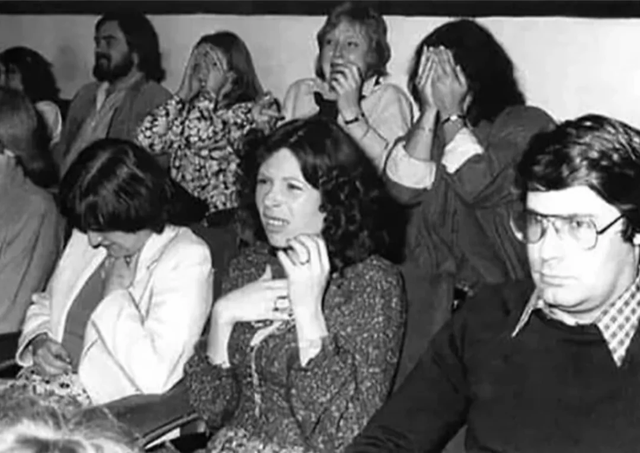
These two routes aren’t mutually exclusive; young people in particular may have both routes active, which leads to higher rates of morbid curiosity among teenagers and young adults.
In my dissertation, I speculated briefly on how this might be facilitated by the mechanisms proposed in Reinforcement Sensitivity Theory (RST). RST is a biological theory of personality that explains behavior and emotions on the basis of systems that deal with sensitivity to reward, punishment, and conflicting goals.
The modern version of the RST proposes three systems: The fight-flight-freeze system (FFFS), the Behavioral Activation System (BAS) and the Behavioral Inhibition System (BIS).
A few dissertation excerpts below with my thinking about RST and the sensation-seeking pathway to morbid curiosity, ca. 2022:
