

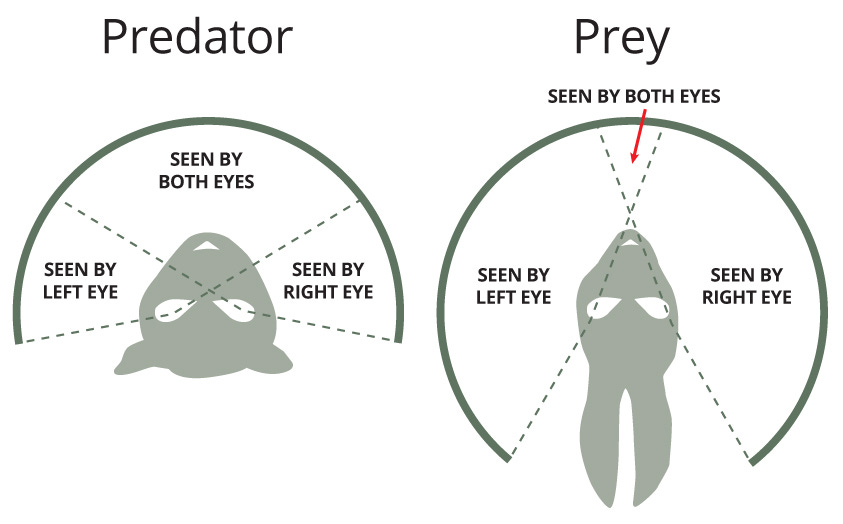
Many of us learned in school that if an animal wants to eat you, it has forward-facing eyes, and if it thinks you want to eat it, it has side-facing eyes. It’s a nice little rule of thumb for identifying whether an animal is likely a predator or prey species.
Side-facing eyes are advantageous if you are a prey animal because they allow you to have a panoramic view of your surroundings. It’s difficult to sneak up on something that can literally see nearly all around itself without moving its head. Deer, goats, sheep, cows, horses, rabbits, and most rodents have side-facing eyes to give them a leg up on predator detection.
Forward-facing eyes are good for predation because binocular vision allows for excellent depth perception, which helps with chasing and directing a pounce at fleeing prey. Big cats, canines, foxes, birds of prey, crocodiles, and most other things that would eat you if they could have forward-facing eyes.
Many arboreal animals also have forward-facing eyes. The binocular vision is a huge aid in judging distances between branches and helps coordinate grasping. Primates fall into this category of arboreal animals with forward-facing eyes, as do tree squirrels, sloths, and koalas.
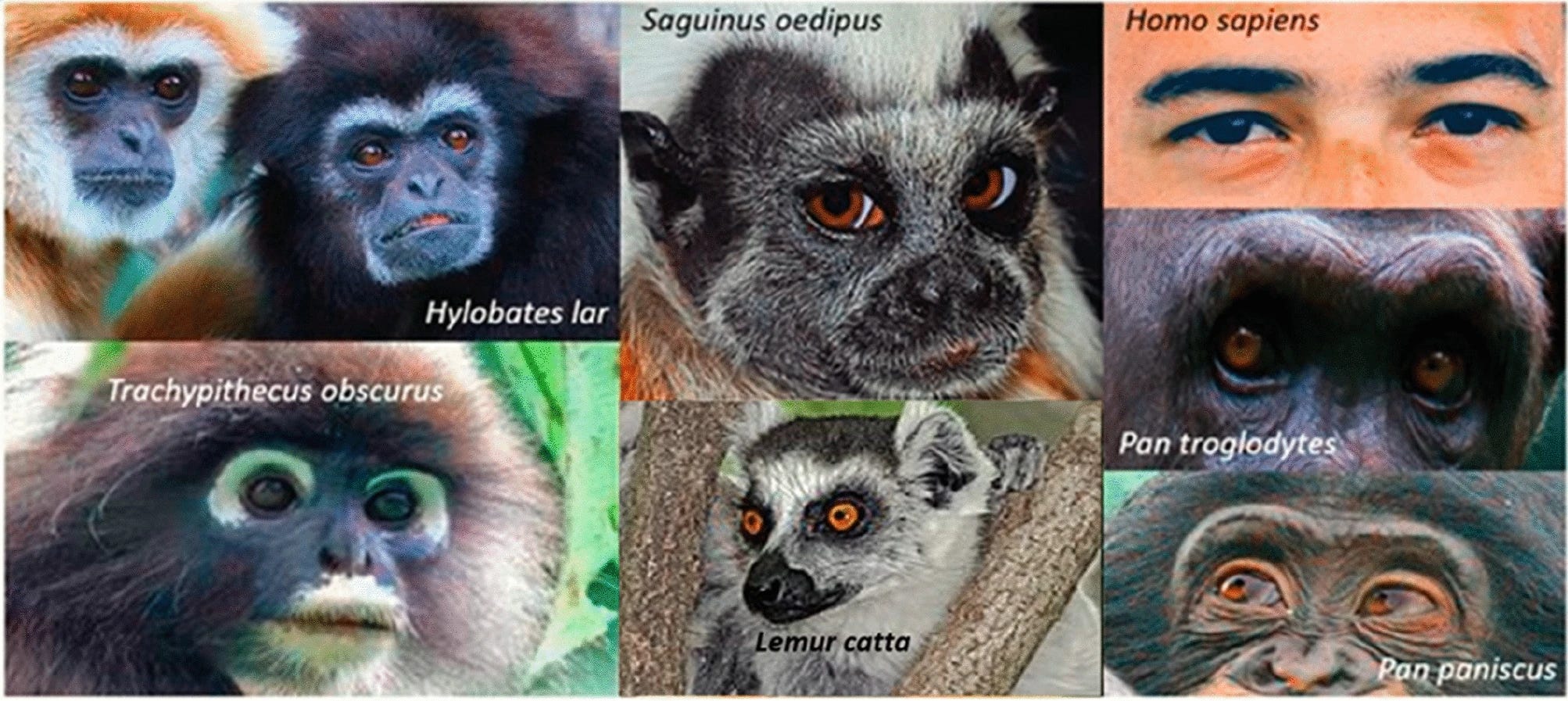
Humans are a bit odd in that we have forward-facing eyes, like most primates, but we no longer inhabit the trees. It’s unclear exactly why human ancestors came down from the trees. Maybe forests became patchier. Maybe there was too much competition. Maybe there were simply more opportunities on the ground.
Whatever the reason, one thing seems likely: early humans were pretty vulnerable animals.
